
Day 2: The First Trial of Jesse Matthew
June 9, 2015
Fairfax, Virginia
Squirrel
Gil Harrington has said that Help Save the Next Girl is this generation's MADD, Mothers Against Drunk Driving. Whereas before, almost unbelievably, there was a tacit casual cultural shrug about teenagers being teenagers and drinking while driving being just an intrinsic tragicomic part of dangerous fun, American culture has grown up and knows better.
Parents and teenagers alike now see the same irresponsible choice--to drive drunk, teenager or not--as virulently reprehensible, and criminal.
The work of Help Save the Next Girl, the powerful organization formed by Gil Harrington, is similar in ferocity. We help shake people awake to a malignancy we may all have been trained at first to shrug about, as if we can not impact the existence of sexual predators.
Help Save the Next Girl wants men and boys and women and girls all to be empowered stewards and to enforce the requirement that any whiff of predatory violence, even the earliest tendrils, the sing-along misogynies and the classic cruelties to animals, none is intrinsic or acceptable in the culture we demand.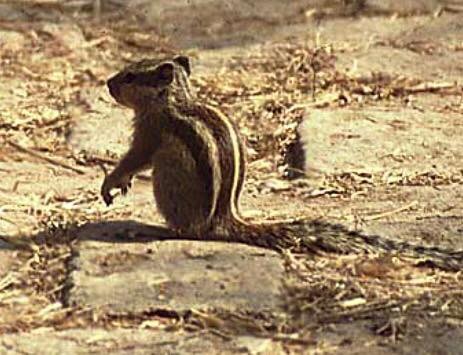
But how?
How do we demand that beating, rape, and abduction (in legalese, the intent to defile) are as reprehensible and unacceptable as murder?
In India, RG's homeland, where I have traveled for 30 years, mythology and history are lovers. Their offspring are epic moral stories which India's 440 million children all know.
This is their story of the squirrel.
In an outrageous capture, Sri Lanka's devilishly handsome King Ravana abducts Sita, who is the Indian goddess-consort of the the Hindu god Rama.
The teardrop-shaped island-nation of Sri Lanka is separated from the southern tip of India by 22 miles of ocean. How to take Rama's powerful army across that stretch, to rescue Sita?
A bridge, of course.
So all the animals, whose intuitions and hearts feel the problem, pitch in as workers. The mighty elephants drag coconut logs; the monkeys toss in floating volcanic rocks. With the gods' help, the bridge begins to cohere.
Lord Rama sees a little squirrel scurrying amidst the great construction. It shimmies into the sand, hurries onto the bridge, shakes, and repeats this strange circuit, again and again. So Rama bends down and asks the squirrel the meaning of its actions.
"O Lord, although I am not a god, nor an impressive elephant, on my back I carry a hundred grains of sand. This offering, I will perform again and again. What contribution I can carry to your bridge, I will make with all my heart." And Rama was so pleased that he gently stroked the squirrel's back, and from then on, in India, squirrels have been born with the stripes made by the grateful god's caress, to remind children that every contribution is sacred work, and that many contributions build a strong path where it seemed one could never be.
Today I drove four hours from my home to Fairfax, Virginia, the place of Jesse Matthew's first trial, so that tomorrow, and for the remainder, I will attend the proceedings with Gil. For the hours in the courtroom, I have a perfect hard-bound sketch book, and a precise black pen.
From a cynical perspective, these will seem hours of small contributions, little grains of our witnessing the great legal machinery move its stylized sprockets and unvaried orders. But we're not fooled.
In court today, the nurse who treated RG at the hospital remembered RG's swollen nose and the bits of leaf and twigs crimped into her hair. RG's head had been banged onto the ground. Her attacker had crippled her with pain and offered a deal: if she allowed his sex, without more struggle, she might live.
That swollen nose was born from a rough punch in the face. Imagine a man with what Gil calls ham-hock hands, hands approximating baseball gloves in their oversized thickness, slamming his fist into RG's face, and you'll know this violent predator was a liar. She wasn't going to live.
But a passerby heard her cries, a good man named Castro, and the attacker ran away, just before RG was strangled to death. She was just mostly strangled. And her shoes and pants were gone. And she was a bloody swollen mess.
Today in court, the Commonwealth, our prosecutors, called twelve witnesses. We've begun to understand the DNA evidence at the scene, and under RG's fingernail.
Morgan's classmate from the Spring 2009 Humanities course I taught her at Virginia Tech, Ian Heflin, who takes care of the national Help Save the Next Girl web site, made a fine observation about the "defense" that maybe the under-RG's-fingernail DNA--which NO ONE refutes is from Jesse Matthew--is actually just "touch DNA," an accidental pollen-like stardust innocence blown by a nice breeze accidentally to land there. Ian asked: then did Castro's "touch DNA", the man who happened by and helped her, also read all over RG, as she got to the hospital? Or what about the people whose blanket she used to cover her nakedness?
No, just a single hit from a male, way up under RG's fingernail: could it be Jesse Matthew's DNA? We'll probably hear officially the forensic certainty tomorrow.
But won't that be just a perfectly innocent coincidence?
As is suggested, no doubt, by Jesse's buttoned-up dress shirt and diagonally striped necktie in court today.
Striped, but not like a squirrel.
Jane Lillian Vance,
Vice President of Help Save the Next Girl
and Morgan Harrington's professor in the last Spring of her life